
Tofo Beach Mozambique: The Ultimate Travel Guide 2026
Tofo Beach is one of southern Africa’s great coastal destinations. A fishing village that became an eco-tourism hub without losing what made it worth visiting in the first place. No high-rises, no all-inclusive resorts, no overdevelopment. Just five kilometres of white sand, an Indian Ocean full of whale sharks and manta rays, and a community that has grown tourism slowly enough to keep it real.
This guide covers everything you need to plan your visit, from the best time to arrive to where to sleep, what to budget and how to get there. Whether you are coming for three days or three months, Tofo Beach Mozambique has a rhythm that fits both.
🏖️ Ready to book your Tofo stay?
Duna Serena Boutique Tofo is an owner-managed eco retreat in the dunes, just 5 minutes from Tofo Beach. Private tiny houses, Starlink WiFi, secure 4×4 parking and a sunset Braai Deck.
Understanding Tofo Beach, Mozambique
Tofo Beach sits approximately 470 kilometres north of Maputo in Inhambane Province, on the Indian Ocean coastline. The village occupies a curved bay facing northeast, sheltered from the prevailing southerly swells that affect much of the Mozambican coast.
What makes the underwater world here extraordinary is geography. The continental shelf drops dramatically close to shore. In some locations just 400 metres from the beach, the ocean floor descends from 10 metres to beyond 100 metres depth. This creates upwelling zones where nutrient-rich deep water meets shallow coastal areas, producing the plankton blooms that support whale sharks, manta rays, humpback whales and five species of sea turtle in numbers found almost nowhere else.
The coastline alternates between sheltered sandy beaches and rocky points. The main Tofo bay handles the bulk of tourism activity, while Tofinho, five kilometres south, offers a smaller and quieter alternative.
Tofo’s history as a fishing village extends back generations. International visitors began arriving in the late 1990s when South African divers discovered the coastline’s potential. Development came slowly, partly due to Mozambique’s civil war recovery, and this slower pace allowed sustainable practices to take root before mass tourism could overwhelm them. Today the balance holds: enough infrastructure for comfortable travel, not enough to erase the character that makes Tofo worth the journey.
When to Visit Tofo Beach, Mozambique
There is no wrong time to visit Tofo Beach, Mozambique. But the experience changes significantly by season, and knowing what you are optimising for makes the difference between a good trip and a perfect one.
Peak Season: October to March
Mozambique’s summer brings warm weather and whale sharks. Encounter rates during December and January reach 75 to 90 percent on organised ocean safaris. Water temperatures climb to 26 to 28°C. Marine life diversity is at its highest, with breeding cycles and feeding activity combining for exceptional underwater experiences.
The trade-offs: accommodation fills up and costs more, underwater visibility is lower (10 to 20 metres) because the same plankton that attracts whale sharks reduces clarity, and occasional tropical storms bring one or two-day rain periods.
Best for: first-time visitors prioritising whale shark encounters, families wanting warm water, anyone seeking maximum marine diversity.
Shoulder Season: April and September to October
April is a transition month. Whale sharks are departing but manta ray activity is increasing. Water temperatures are still warm (25 to 26°C), visibility is improving, and tourist numbers have dropped. For many experienced travelers, April is the sweet spot.
September and October bring the first whale sharks of the new season while manta activity remains high. Pre-peak pricing with good availability and water temperatures warming from 24 to 26°C.
Best for: flexible travelers seeking value, photographers wanting good visibility with marine life, divers wanting uncrowded sites.
Winter Season: May to August
The cooler months are the best diving season in Tofo. Underwater visibility reaches 25 to 30 metres or more. Manta ray encounters are at their peak. Humpback whales move through from July to November, with underwater songs audible during dives from August onward. Accommodation costs are at their lowest and availability is generous.
The trade-offs: whale sharks are not present, water temperatures drop to 22 to 24°C requiring a 5mm wetsuit, and some restaurants and operators reduce hours.
Best for: serious divers, photographers, budget travelers, anyone who wants Tofo without the crowds.
| Season | Whale Sharks | Mantas | Humpbacks | Visibility | Crowds |
|---|---|---|---|---|---|
| Oct-Mar | Peak | Yes | No | 10-20m | High |
| Apr, Sep-Oct | Shoulder | High | Arriving | 20-25m | Medium |
| May-Aug | No | Peak | Peak | 25-30m+ | Low |
🌊 Planning a diving trip?
Read our complete whale shark guide for season details, ethical snorkeling tips and top operators. Or check if Tofo is safe for your travel style.
How to Get to Tofo Beach
By Air
The primary international entry point is Maputo International Airport (MPM), with connections from South Africa, Kenya, Ethiopia and Europe via Johannesburg. Most visitors fly into OR Tambo International Airport (JNB) and connect to Maputo.
Inhambane Airport (INH), approximately 30 kilometres from Tofo, receives limited commercial service. Check current availability before planning around it, as schedules are unreliable.
Visa: many nationalities receive a tourist visa on arrival ($50 USD for 30 days). South African citizens enter visa-free. Verify requirements for your passport before departure.
By Road (Self-Drive)
Driving from South Africa is the preferred option for the majority of visitors, particularly South Africans and Zimbabweans who want flexibility and their own vehicle at Tofo.
The main route from Johannesburg follows the N4 to Komatipoort, crosses into Mozambique at Ressano Garcia, then heads north on the EN1 through Maputo, Xai-Xai and Inhambane to Tofo. Total distance approximately 850 kilometres, 9 to 11 hours including the border crossing.
A 4×4 vehicle is strongly recommended. The EN1 is paved but potholed in sections. The final approach to Tofo and properties on the dunes requires 4×4 traction, particularly after rain or in soft sand.
For a complete self-drive planning guide including border crossing tips, fuel stops and road conditions, read our 4×4 road trip to Tofo guide.
By Transfer or Shuttle
Private transfer from Maputo: $150 to $250 USD one-way, 5 to 6 hours. Comfortable and straightforward but expensive.
Shared shuttle: $50 to $75 USD per person, 6 to 7 hours. Several operators run multiple times weekly. Book through your accommodation.
Public transport (chapa): $15 to $25 USD Maputo to Inhambane, then $3 to $5 USD local chapa to Tofo. Budget option requiring Portuguese and patience.
Activities at Tofo Beach
Whale Shark Snorkeling (October to March)
The headline experience. Ocean safari boats search for whale sharks on the surface, dropping snorkelers into the water when sharks are located. No diving experience required. Tours last 3 to 4 hours and cost $60 to $100 USD per person including equipment.
Success rates: 75 to 90 percent during peak months, 60 to 70 percent in shoulder season.
The Marine Megafauna Foundation has conducted research in Tofo since 2005 and publishes ethical guidelines for whale shark interaction. All reputable operators brief guests on these before entering the water.
Read the complete whale shark guide for operator recommendations, season details and ethical snorkeling practice.
Scuba Diving (Year-Round)
Tofo’s most consistent activity regardless of season. Key sites include Manta Reef (manta ray cleaning station), Giants Castle (sharks and pinnacle diving), Galleria (swim-throughs) and Amazon (training and macro photography).
Single dive: $40 to $60 USD. Multi-dive packages reduce cost. Open Water certification courses from $350 USD, Advanced from $250 USD.
Top operators: Tofo Scuba, Liquid Dive Adventures, Peri-Peri Divers, Diversity Scuba.
Beach Activities
Swimming in the main Tofo bay is good, with some rip currents. Observe where local swimmers enter the water and follow their lead. Tofinho is calmer for families with young children.
Surfing: reliable breaks for beginners and intermediates. Board rental $15 to $25 USD daily, lessons available through several operators.
Sea kayaking: $20 to $35 USD daily rental for coastal exploration. Dolphin encounters are common.
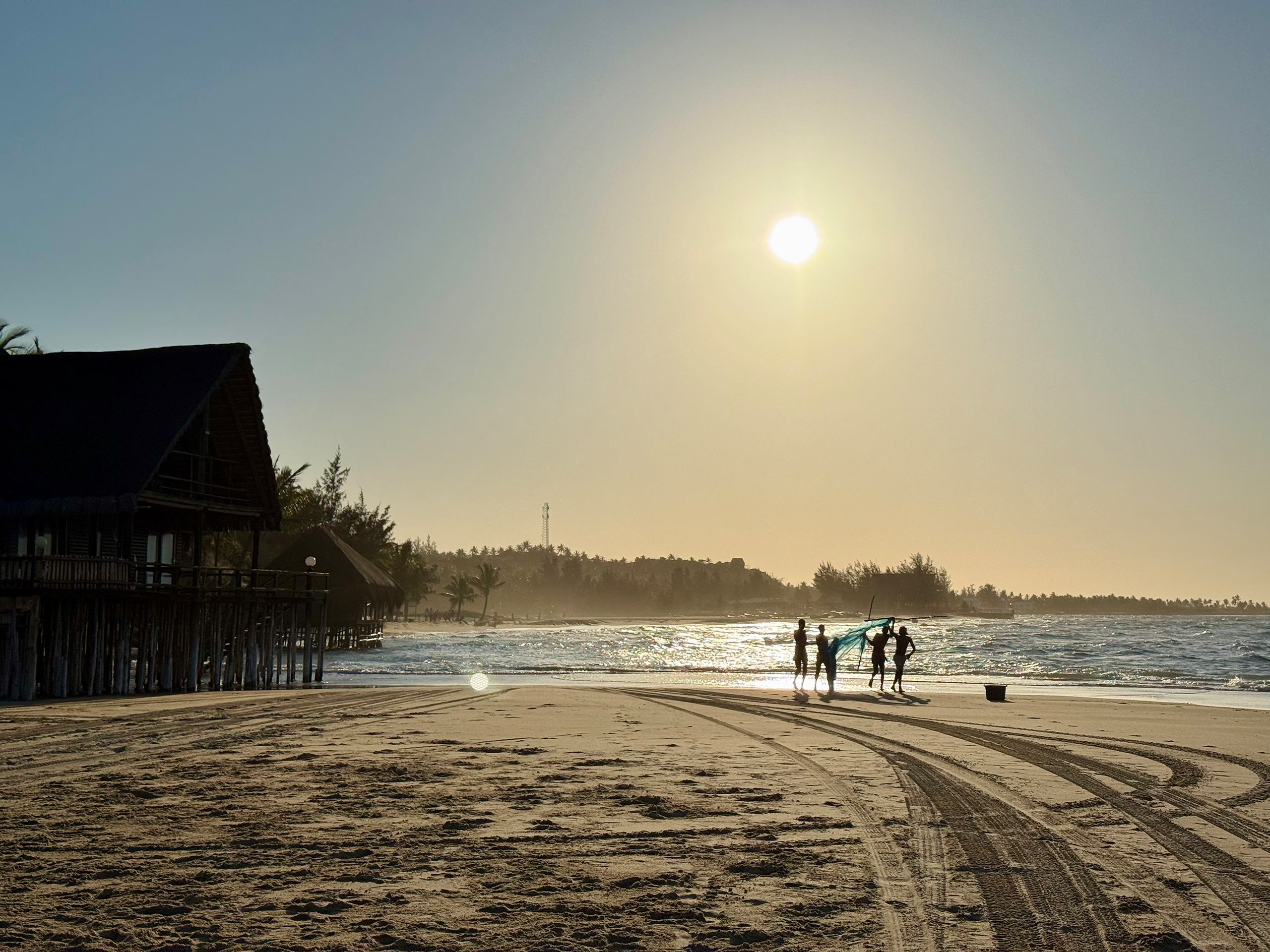
Beach walking: the undeveloped coastline rewards early morning and late afternoon walks. The light at those hours is exceptional.
Cultural Experiences
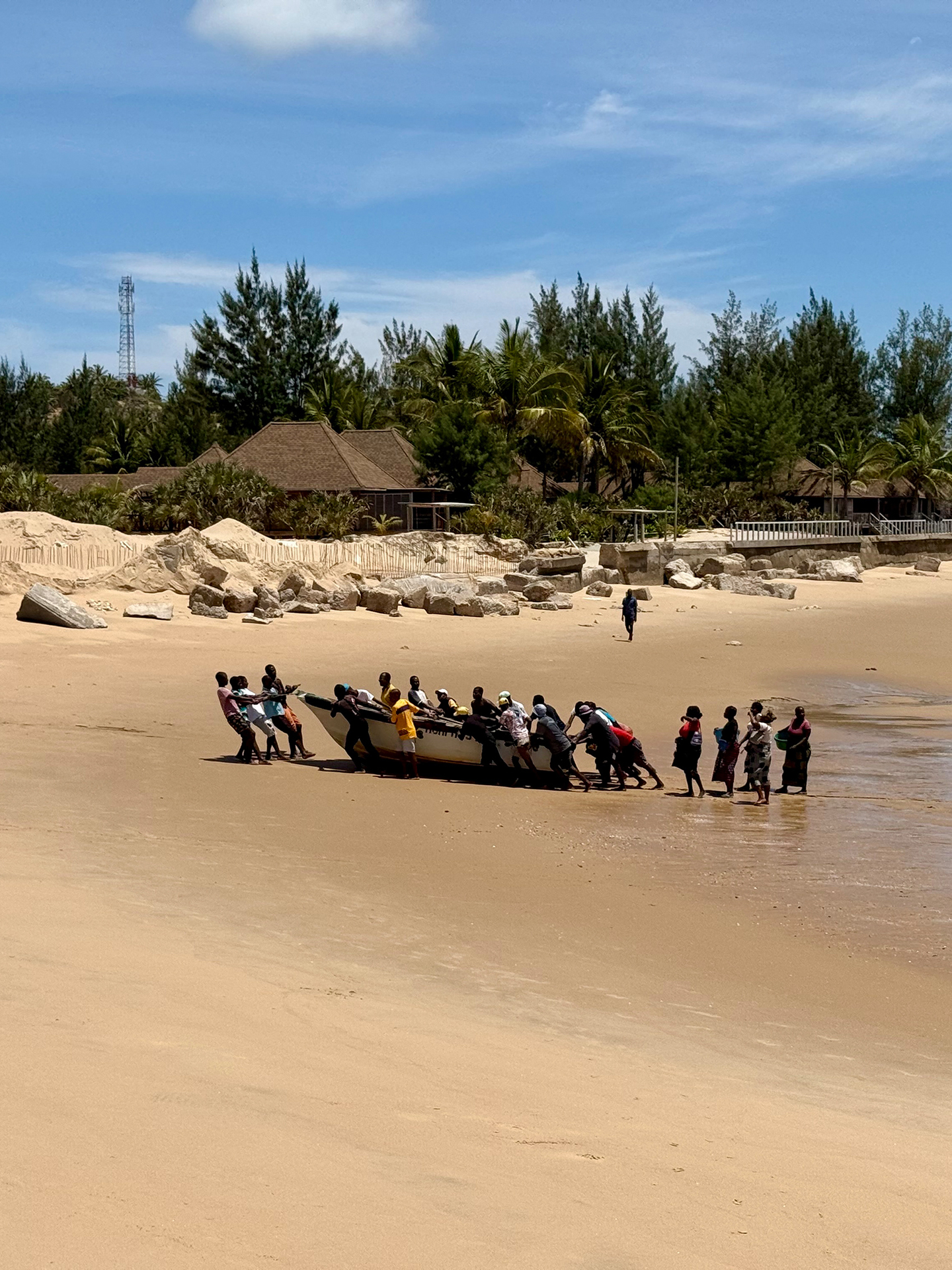
Morning fish market in the village gives a direct view of traditional fishing practice. Arrive early for the best activity.
Local restaurants serve traditional Mozambican dishes: piri-piri prawns, matapa (cassava leaf stew), grilled fresh fish. The best meals in Tofo are often the simplest ones.
Dhow sunset sails: 2 to 3 hour excursions on traditional wooden sailing vessels. $40 to $60 USD per person typically including drinks. One of the most reliable ways to end a day well.
Accommodation in Tofo Beach
Tofo Beach Mozambique accommodation spans from backpacker hostels to boutique eco retreats. The right choice depends on what kind of trip you are building.
Budget ($15 to $40 per night)
Dormitory beds and basic private rooms in beach-facing backpacker establishments. Communal kitchens, bar areas and a social atmosphere. Often integrated with dive centers, which keeps costs down for divers doing multiple days of diving. Noise on weekends is part of the deal.
Mid-Range ($50 to $120 per night)
The largest category in Tofo. Private bungalows or rooms with en-suite bathrooms, often with breakfast included. Quality varies significantly within this range. Beachfront properties command a premium. Book 4 to 8 weeks ahead during peak season.
Boutique and Eco-Lodge ($120 to $300 per night)
A smaller category in Tofo but one that has grown in recent years. Properties in this range offer design-led accommodation, privacy, quality infrastructure and attentive service without the scale of a large resort.
Duna Serena Boutique Tofo sits in this category. Private eco-friendly tiny houses in the dunes, 5 minutes from Tofo Beach. Air conditioning, private outdoor terrace, Starlink internet for remote workers and fast upload of underwater footage. The owner lives on-site full-time, which provides both security and direct local knowledge. Secure shaded parking for 4×4 vehicles. The Braai Deck offers a natural gathering point for the end of a long day on the ocean.
“The owner sorted out our dive bookings on arrival and had the braai going by the time we got back from the afternoon session. That’s the kind of thing you don’t get in a bigger place.” — Stefan, Cape Town
Book directly at Duna Serena Boutique Tofo for best rates.
Long-Term Rentals
Monthly rates for houses and apartments range from $500 to $1,500 depending on location and quality. The Facebook group “Tofo Community” is the most active local source for listings. Utilities are usually excluded.
Best for digital nomads, extended dive trips, families preferring self-catering.
Budget Planning for Tofo Beach
Daily Cost Estimates
Budget traveler ($40 to $60 per day): hostel bed $15 to $25, self-catering plus one cheap restaurant meal $15 to $25, minimal activity costs, water and incidentals $10.
Mid-range traveler ($100 to $150 per day): guesthouse $50 to $80, meals at restaurants $30 to $50, one paid activity $40 to $100, transport and tips $10 to $20.
Premium traveler ($250 to $400 per day): boutique accommodation $120 to $300, all meals at quality restaurants $60 to $100, multiple activities or premium experiences $100 to $200.
Activity Costs
Single scuba dive: $40 to $60. Whale shark tour: $60 to $100. Surf lesson: $40 to $60. Sea kayak daily rental: $20 to $35. Dhow sunset sail: $40 to $60. Snorkel equipment rental: $10 to $15 daily.
Accommodation costs increase 20 to 30 percent during peak season (December to January). Activity pricing is relatively consistent year-round.
Practical Information for Tofo Beach
Money
Mozambican Metical (MZN) is the official currency. South African Rand and US Dollars are widely accepted in Tofo. ATM availability in the village itself is limited. Inhambane town, 30 kilometres away, has more reliable banking. Carry more cash than you think you will need.
Credit cards are accepted in higher-end establishments only. Cash is the standard transaction method at most restaurants, operators and local shops.
Tipping: not mandatory but appreciated. Ten percent is generous in restaurants. Dive guides $5 to $10 per day.
Communication
Vodacom and Movitel provide mobile coverage in Tofo. Local SIM cards are available in Inhambane from $5 to $10. Data packages are reasonably priced for basic use.
WiFi quality varies enormously between properties. Accommodation with Starlink provides reliably fast internet. If connectivity matters to your stay, confirm the specific setup before booking rather than assuming WiFi means fast WiFi.
Portuguese is the official language. English is spoken widely in tourism businesses. Basic Portuguese phrases are appreciated by locals and go a long way in markets and local restaurants.
Health
Malaria prophylaxis is recommended. Tofo is in a malaria zone. Consult your GP or a travel clinic before departure and begin medication as directed.
Tap water is not safe to drink. Bottled water is widely available and inexpensive.
Vaccinations: yellow fever certificate required if arriving from endemic countries. Hepatitis A and Typhoid recommended.
Medical facilities in Tofo are basic. Serious medical issues require transfer to Inhambane or Maputo. Travel insurance with medical evacuation cover is essential.
For a detailed safety breakdown specific to Tofo, read our honest safety guide for 2026.
What to Pack
Light clothing for warm weather with a light layer for winter evenings. A 3mm wetsuit for summer diving, 5mm for winter. Reef-safe mineral sunscreen only (chemical sunscreen is prohibited in the water near whale sharks and reef systems). DEET insect repellent. Sealed water bottles. A head torch for unlit paths at night. Offline maps downloaded before arrival.
Frequently Asked Questions
What is Tofo Beach known for?
Tofo Beach is internationally known for whale shark encounters, which are possible year-round due to a resident population, with peak concentrations from October to March. The village is also a major scuba diving destination with exceptional manta ray encounters, humpback whale sightings from July to November, and five species of sea turtle.
Is Tofo Beach safe to visit?
Yes. Tofo is one of Mozambique’s most established and visited coastal destinations with a strong safety record for international visitors. Standard precautions apply: malaria prevention, avoiding driving after dark and not leaving valuables unattended. Read our complete safety guide for full details.
How do I get to Tofo Beach from South Africa?
Most visitors drive via the N4 to Komatipoort, crossing into Mozambique at Ressano Garcia, then north on the EN1 to Tofo. Total approximately 850 kilometres from Johannesburg, 9 to 11 hours. A 4×4 is strongly recommended. Read our complete self-drive guide for route, border crossing and road condition details.
When is the best time to visit Tofo Beach, Mozambique?
It depends on your priorities. October to March for whale sharks and warm water. May to August for the best diving visibility, manta rays and lowest prices. April and September to October offer a balance of both. There is no bad time to visit.
How many days do you need in Tofo?
A minimum of three days allows time for one or two ocean activities, a beach day and a feel for the village. Five to seven days is more comfortable. Many visitors end up extending their stays. Digital nomads and divers regularly base themselves here for weeks or months.
Where to stay in Tofo Beach for the best experience?
This depends on your travel style. Backpackers suit budget travelers and solo divers. Mid-range guesthouses suit couples and small groups. For privacy, quality infrastructure and an owner-managed experience, Duna Serena Boutique Tofo is the boutique option in the dunes, 5 minutes from the beach. Book directly here for the best rate. Tofo Beach Mozambique offers options for every travel style.
🌊 Tofo Beach is waiting. Book your stay at Duna Serena Boutique Tofo.
Private tiny houses in the dunes · Owner on-site · Starlink WiFi · Secure 4×4 parking · Sunset Braai Deck · 5 min to Tofo Beach
Book via Email | WhatsApp | +258 84 664 5310
Duna Serena Boutique Tofo · Josina Machel Street, Tofo, Inhambane, Mozambique reservations@dunaserena.com · +258 84 664 5310 · dunaserena.com