Diving in Tofo, Mozambique: The Complete 2026 Guide to Reefs, Marine Life and Dive Operators
Diving in Tofo, Mozambique puts you in the water above one of the Indian Ocean’s most dramatic underwater landscapes. The continental shelf drops steeply close to shore, creating the conditions that attract an extraordinary range of marine life year-round. Tofo Scuba alone accesses 26 local reefs on regular rotation, and the marine life above and below the thermocline shifts with the seasons, meaning no two trips to Tofo are identical. Whether you are a first-time diver or a seasoned underwater photographer, Tofo has a dive for you.
🤿 Your base for diving Tofo Mozambique
Duna Serena Boutique Tofo is 5 minutes from Tofo Beach and all major dive operators. Secure 4×4 parking, Starlink WiFi for uploading footage that same evening, and private tiny houses in the dunes.
Why Tofo Beach Is Unlike Anywhere Else for Scuba Diving
When it comes to diving Tofo Mozambique, the geography is the foundation. Tofo offers several, simultaneously.
The geography is the foundation. Where most of the world’s continental shelves slope gradually away from shore over tens of kilometres, Tofo’s shelf drops dramatically within 400 metres of the beach. This means that pelagic species, which normally require long boat rides to encounter, are accessible on relatively short trips. Oceanic manta rays, whale sharks, and open-water shark species all move through waters that a beginner diver can reach comfortably.
At the same time, the reef system is genuinely diverse. The dive sites off Tofo combine sponge gardens, reef pinnacles and a handful of shallow wrecks, which creates variety across a single day of diving. The big animals and the macro life coexist. Ghost pipefish, flamboyant cuttlefish and dozens of nudibranch species inhabit the same reef systems as the manta rays and whale sharks. For underwater photographers, this combination of scale is exceptionally rare.
Night dives add another dimension entirely. On calm evenings the plankton produces bioluminescence, the water glowing around movement in a way that is difficult to describe and impossible to forget. The nocturnal marine life, crabs, sleeping fish, octopus and the various creatures that only emerge in darkness, create an experience that feels entirely separate from the daytime dives at the same sites.
The Marine Megafauna Foundation has maintained a research base in Tofo since 2005. The presence of active marine science in the village gives the diving community here a particular character: operators are informed, ethical guidelines are taken seriously, and the conservation conversation is part of daily life in a way that is unusual for a small coastal village. This is what makes diving Tofo Mozambique the most complete underwater destination in southern Africa.
Best Dive Sites in Tofo, Mozambique
Tofo’s operators collectively access more than two dozen sites around Inhambane Bay. These are the sites that define the diving here.
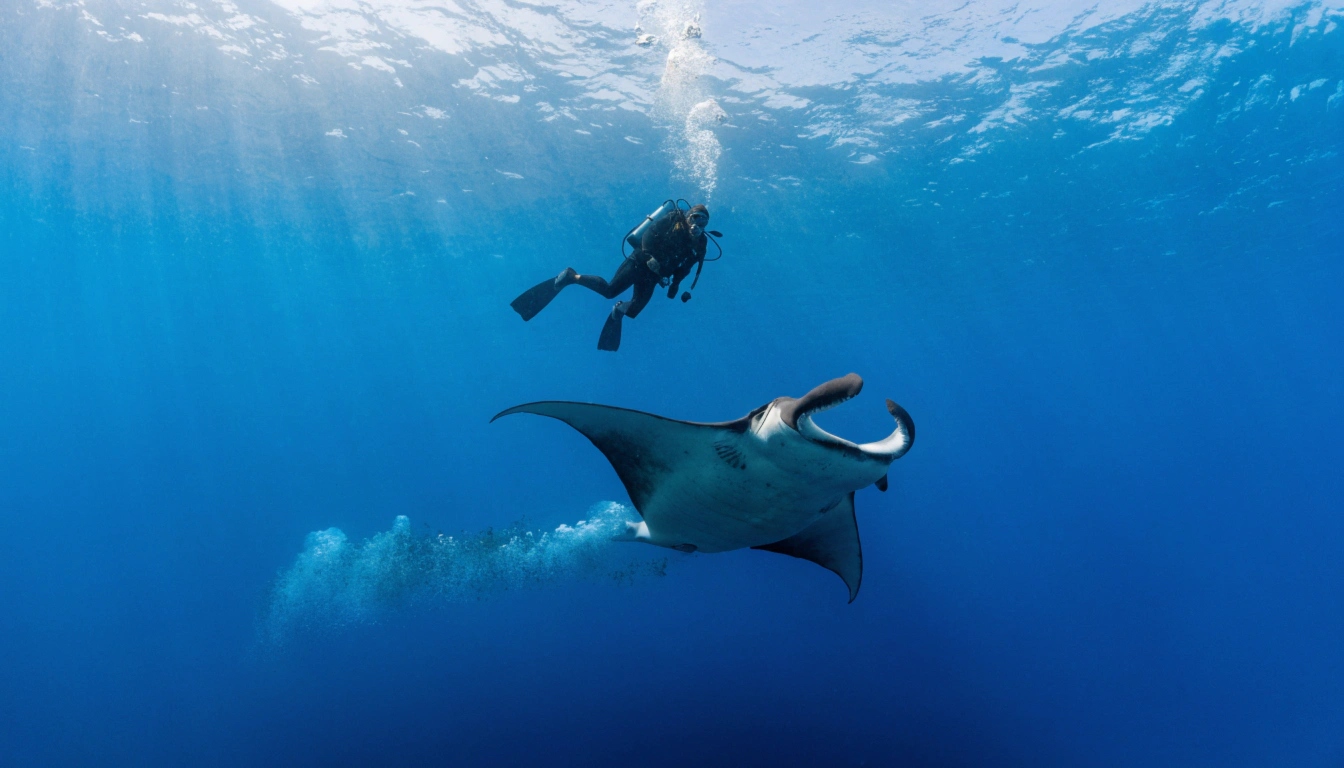
Manta Reef is the site that most divers come specifically to visit. An established cleaning station where oceanic manta rays gather to have parasites removed by cleaner wrasse, this site produces reliable encounters year-round with peak density from May to October. Depths range from 18 to 30 metres. On a good day, multiple mantas circle the cleaning station simultaneously, their wingspan reaching four metres or more, moving with the particular unhurried grace that makes them so compelling to watch.
Giants Castle is a pinnacle site designed for experienced divers. Strong currents sweep through, bringing schooling fish in large numbers, white tip reef sharks, guitar fish and the occasional hammerhead on deeper sections. The current is the point: it brings the food, the food brings the predators, and the visual density at this site on a strong-current day is extraordinary. Advanced Open Water certification is recommended.
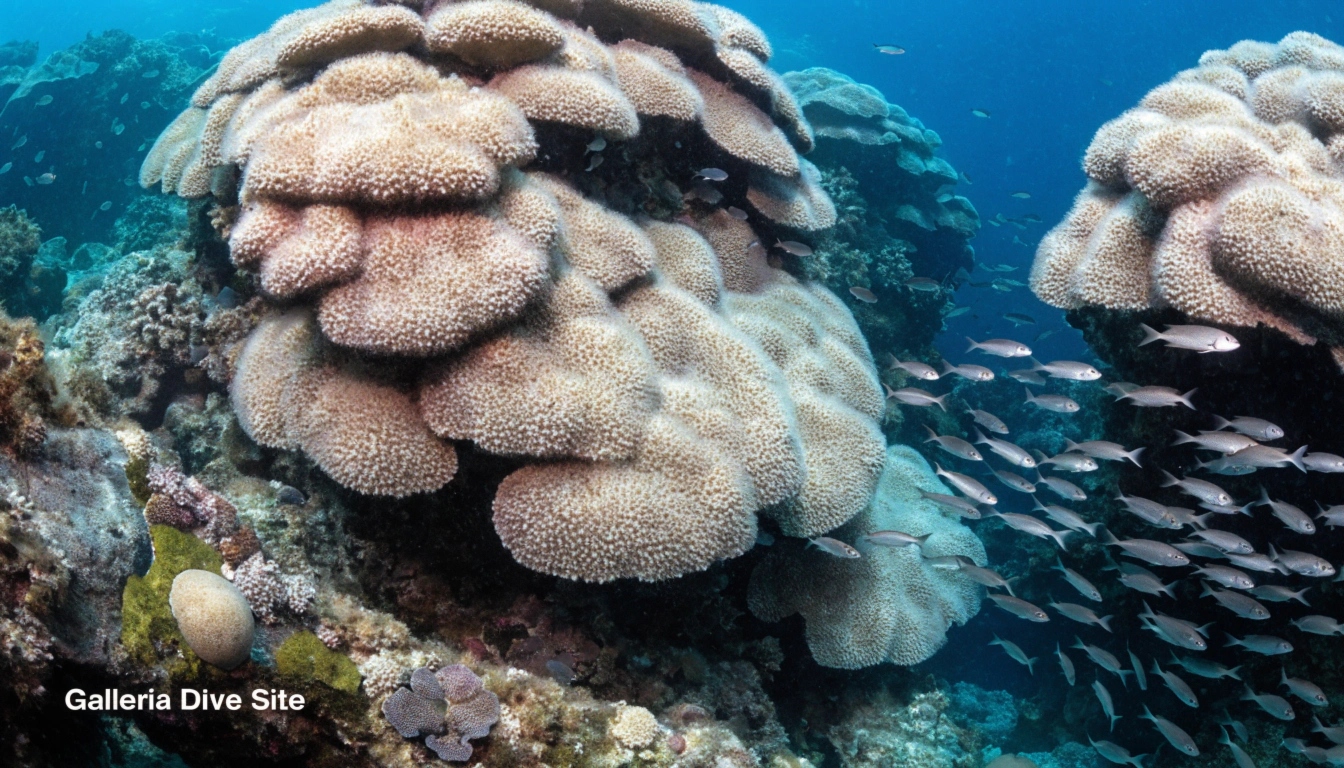
Galleria offers a different character entirely. Swim-throughs and natural archways draped in soft coral create a three-dimensional environment that rewards slow, deliberate diving. Depths of 12 to 22 metres make it accessible to Open Water certified divers, and the photographic opportunities, both wide-angle and macro, are exceptional.
Amazon is Tofo’s training and macro site. Shallow, calm and rich in small reef life, it is where certification courses take their first open water dives and where dedicated macro photographers spend hours searching for nudibranch species, ghost pipefish and tiny crustaceans that require patience to find and skill to photograph.
Sherwood Forest earns its name from the density of soft coral growth covering the reef. Turtles are common here year-round. Visibility is consistently good and the site rewards multiple visits across a trip as the marine life changes through the day.
Night Dive Sites — most operators offer structured night dive programmes at selected shallow sites within the bay. The experience is genuinely different from daytime diving at the same locations. Bring a primary torch and a backup. If you are lucky with conditions, the bioluminescence in the water column on the descent is one of those moments that defines why people travel this far to dive.
Marine Life When Diving Tofo Mozambique
| Marine Life | Best Season | Encounter Frequency |
|---|---|---|
| Oceanic Manta Rays | May–Oct (year-round) | Very High |
| Whale Sharks | Oct–Mar | High in season |
| Humpback Whales | Jul–Nov | Seasonal |
| Sea Turtles | Year-round | High |
| White Tip Reef Sharks | Year-round | Regular |
| Guitar Fish | Year-round | Regular |
| Ghost Pipefish | Year-round | Moderate |
| Nudibranchs | Year-round | High |
| Dolphins | Year-round | Common |
| Hammerhead Sharks | Deep sites, year-round | Occasional |
The manta rays deserve particular attention. Unlike whale sharks, which follow seasonal plankton blooms, Tofo’s oceanic manta ray population is resident year-round. The cleaning stations, particularly Manta Reef, are productive in every month. May to October brings the highest densities as winter current patterns concentrate food sources, but a diver visiting in December can expect manta encounters on most days at sea.
Humpback whales add an extraordinary dimension to diving from July to November. Their songs are audible underwater during surface intervals and occasionally during the dive itself, a low frequency sound that seems to come from everywhere at once. During peak whale season in August and September, surface sightings from the dive boat on the way to and from sites are routine.
📅 Planning your diving trip to Tofo?
Read our complete whale shark guide for season details and ethical snorkeling tips. Or check our Tofo Beach travel guide for full seasonal breakdown and practical planning information.
When to Visit Tofo for the Best Diving
There is good diving in Tofo in every month, but the experience changes significantly across the year. Knowing which season aligns with your priorities makes the difference between a good dive trip and an outstanding one.
May to September: peak diving season. Winter in Mozambique brings the clearest water of the year. Visibility reaches 25 to 30 metres or more at the best sites. Manta ray encounters are at their highest density. Humpback whales move through from July onward. Water temperatures drop to 22 to 24°C, making a 5mm wetsuit the right choice. This is the season for serious divers who prioritise visibility, manta encounters and photographic conditions.
October to March: whale shark season. Summer brings warmer water (26 to 28°C), whale sharks, and higher marine biodiversity. The same plankton bloom that attracts whale sharks reduces visibility to 10 to 20 metres, which is still functional for diving but less spectacular than winter conditions. Manta rays remain present. For divers who want whale sharks and warm water, this is the right time.
April and September to October: transition months. These are the months that experienced divers return to. Visibility is improving or excellent, whale shark season is transitioning, manta activity is high, and the number of divers in the water is lower than peak months. Advance bookings less critical, sites less crowded, conditions strong.
The honest summary: if you dive primarily for visibility and manta rays, come in winter. If you dive primarily for whale sharks and warm water, come in summer. If you want both, come in October or April.
Top Dive Operators in Tofo, Mozambique
Four established operators cover the range of diving experiences available in Tofo.
Tofo Scuba is Tofo’s longest-running dive centre and operates directly from the beach. Three purpose-built semi-rigid boats access 26 local reefs on a regular basis. The team includes qualified PADI instructors, divemasters and experienced boat skippers. A fully stocked bar and restaurant on-site makes Tofo Scuba a natural gathering point for the diving community between sessions. PADI training courses are available up to and including Nitrox certification. Whale watching trips run during humpback season.
Liquid Dive Adventures is a 5-star PADI IDC Centre, meaning it is certified to train PADI professionals up to instructor level. This operational standard flows into the quality of recreational diving as well. Beach bungalows are available for those wanting accommodation integrated with their dive centre. Conservation courses, documentary nights and whale interaction tours reflect a strong environmental commitment.
Peri-Peri Divers has operated in Tofo for close to 25 years and recently completed construction of a revamped new dive centre. The longevity of the operation reflects consistent quality. Particularly strong for beginner and intermediate divers who benefit from patient, experienced instruction.
Diversity Scuba operates with smaller group sizes, which suits photographers and divers who prefer a more relaxed pace underwater. Less commercial in feel, more personalised in delivery.
Prices across operators: single dive $40 to $60 USD. Multi-dive packages (6 to 10 dives) offer meaningful discounts and are the best value for dedicated dive trips. Equipment rental available at all operators. For serious diving, Tofo Mozambique’s operator network is one of the strongest on the African continent.
Diving Certification Options in Tofo
Tofo is an excellent place to complete a diving certification, particularly during shoulder season when conditions are good and dive sites are less crowded.
Discover Scuba Diving: no prior certification required. A half-day introduction to breathing underwater in a controlled environment followed by a shallow guided dive. Cost approximately $80 to $120 USD. Suitable for anyone considering diving who wants to try before committing to a full course.
Open Water Diver (PADI): the entry-level certification that qualifies you to dive independently to 18 metres worldwide. Three to four days, combining theory, pool or confined water sessions and four open water dives. Cost $350 to $500 USD at Tofo operators.
Advanced Open Water (PADI): extends certification to 30 metres and adds five specialty dives including deep diving and underwater navigation. Two days. Cost $250 to $350 USD. Giants Castle and deeper Tofo sites become accessible.
Specialty Courses: Nitrox at Tofo Scuba extends bottom time on repetitive dives. Underwater photography courses available at several operators. Night diver specialty well suited to Tofo’s nocturnal conditions.
Divemaster and Instructor: Liquid Dive Adventures as a 5-star PADI IDC Centre can train divers to professional level. For those considering a career in diving, Tofo offers professional training in genuinely exceptional conditions.
Where to Stay During Your Tofo Dive Trip
Accommodation choice has a practical effect on a dive trip. Early morning ocean safaris and dive boats depart before 8 AM. Being close to the operators matters.
Duna Serena Boutique Tofo is located 5 minutes by car from Tofo Beach and all major dive operators. The distance is short enough to make early departures easy without the disruption that a longer transfer would involve.
The practical setup at Duna Serena is well suited to divers specifically. Starlink internet means GoPro and camera footage can be uploaded that same evening, edited and shared while the dive is still fresh. Secure shaded parking for 4×4 vehicles handles the equipment-heavy arrivals typical of self-drive dive trips from South Africa. The owner lives on-site and knows the operators personally, so dive bookings, site recommendations and current conditions are available as direct local knowledge rather than a generic search result.
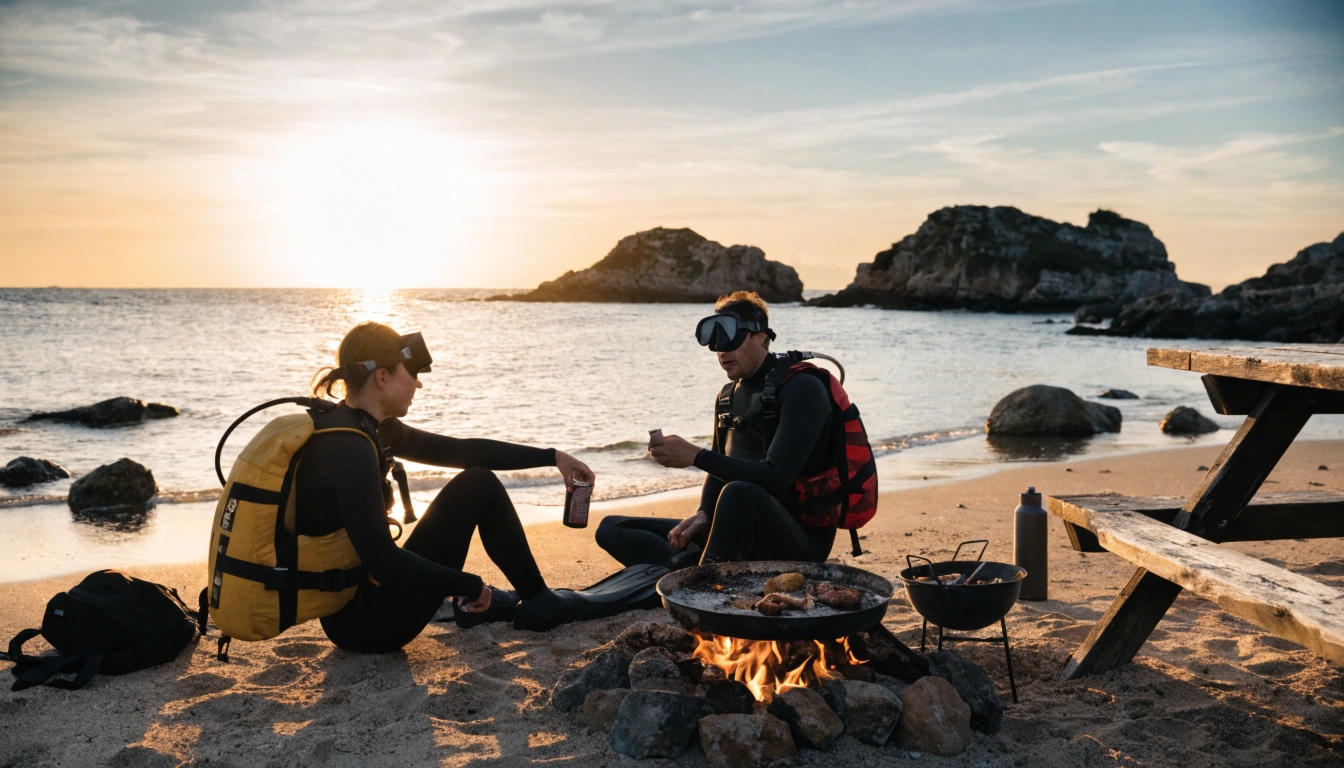
After a day of multiple dives, the Braai Deck does what it is supposed to do. A fire, food, the sound of the dunes at night and the particular tiredness of a body that has spent hours in the water.
“We did six dives over three days. Uploading everything via Starlink each evening and reviewing footage on the terrace before dinner. The owner knew exactly which sites were running well that week and called ahead to Tofo Scuba for us. That kind of local knowledge saves a day.” — Anna, Vienna
🌊 Dive Tofo. Sleep in the dunes.
Duna Serena Boutique Tofo · 5 min from all dive operators · Starlink WiFi · Secure 4×4 parking · Sunset Braai Deck · Private tiny houses
Book via Email | WhatsApp | +258 84 664 5310
Frequently Asked Questions
Is diving Tofo Mozambique suitable for beginners?
Yes. Several sites, particularly Amazon and Galleria, are well suited to Open Water certified divers and beginners. All operators offer courses for complete beginners starting with Discover Scuba Diving. Conditions in the bay are generally calm, particularly during summer months, making Tofo a comfortable environment for those early in their diving experience.
What is the best time of year for diving in Tofo?
For diving Tofo Mozambique, May to September delivers peak visibility and manta encounters. October to March for whale sharks and warmer water (26 to 28°C). April and September to October offer a transition balance of both. There is no month when diving is not available in Tofo.
Do I need to bring my own equipment for diving in Tofo?
No. All operators provide full equipment rental including BCD, regulator, wetsuit, mask, fins and tanks. Bringing your own mask and wetsuit is recommended for comfort and fit, but not required. Underwater cameras and GoPro mounts are not typically provided and are best brought from home.
Can I get PADI certified in Tofo, Mozambique?
Yes. Open Water, Advanced Open Water, Nitrox and specialty courses are available at Tofo Scuba, Liquid Dive Adventures and Peri-Peri Divers. Liquid Dive Adventures is a 5-star PADI IDC Centre offering professional training up to instructor level. Shoulder season, April and September to October, offers the best combination of conditions and availability for multi-day courses.
Are there night dives available in Tofo?
Yes. Most operators offer night dives at selected shallow sites within Inhambane Bay. Bioluminescence is possible on calm nights during plankton bloom periods. Nocturnal marine life including crabs, octopus, sleeping fish and various species not seen during daylight dives make night diving in Tofo a genuinely different experience from the daytime sites.
How far are the dive operators from Duna Serena Boutique Tofo?
Five minutes by car. All major operators, including Tofo Scuba, Liquid Dive Adventures, Peri-Peri Divers and Diversity Scuba, are located at or near Tofo Beach. Duna Serena Boutique Tofo has secure shaded parking on-site and the owner can advise on current operator availability and site conditions on arrival.
Duna Serena Boutique Tofo · Josina Machel Street, Tofo, Inhambane, Mozambique reservations@dunaserena.com · +258 84 664 5310 · dunaserena.com